Pittston
Mariners' Museum, Uncurated Search Results
Type: Schooner Barge
Year: 1906
Builder: Sharptown Marine Railway
Location: Sharptown
These records are found in the online catalog of The Mariners’ Museum and Park in Newport News, Virginia. Uncurated search results are presented to give researchers and interested readers an idea of whether the museum’s archives contain information about this vessel and whether it may be worthwhile to visit the museum’s catalog search page for further investigation. Uncurated results may be inaccurate or incomplete.
Search mode: Exact Name. Search phrase(s): "Pittston". Results returned: 10. Results displayed in this table: 10.
Use these buttons to send uncurated search results to your own app or text document for further research. First, check the box for any row, or click "Select All" then uncheck any rows. Then click "Show Selections". You can then copy your selections from the text box and past them into your app.
| Fetch? | Row ID | Media | Date | Vessel | Place | Related Places | Inscription/Marks | Subject | Notes | Archive Number |
|---|---|---|---|---|---|---|---|---|---|---|
| 1 | 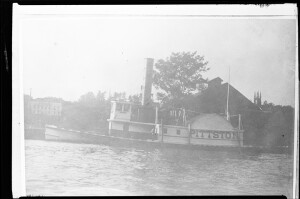 | 1883-1931 | "Pittston"/1852; Towboat. | Broadside of a towboat. | MS0091/03.01-44#056 | |||||
| 2 | 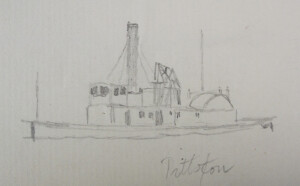 | PITTSTON | CL22566 | |||||||
| 3 | 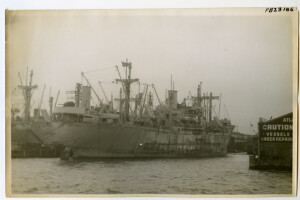 | WRITTEN ON VERSO: BUILT 1945 AT BALTIMORE, MARYLAND BY BETHLEHEM FAIRFIELD SHIPYARD. OWNED BY THE US WAR SHIPPING ADMINISTRATION. 7,607T, 439.1 X 62.1 X 34.5. RENAMED LOMBOK | View of vessel in port | P0001.003/01-#PB23186 | ||||||
| 4 | 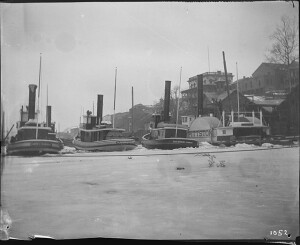 | 3/1/1895 | Thomas Dickson (Steamboat : 1872).; John D. Schoonmaker (Steamboat : 1888).; Harry (Steamboat : 1892).; Pittston (Side wheel steamer : 1852). | Pittston; 1052 | Steamboats–New York (State)–Rondout.; Tugboats–New York (State)–Rondout.; Paddle steamers–New York (State)–Rondout. | Shows the sterns of three tugboats moored in icy water. A side wheel steamer is moored nearby. Stanton's notebooks contain the following information about this item: "Rondout, Mar 1, 1895" | MS0094/01-#1052 | |||
| 5 | 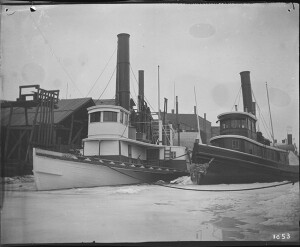 | 3/1/1895 | Pittston (Side wheel steamer : 1852).; Thomas Dickson (Steamboat : 1872). | Pittston; 1053 | Steamboats–New York (State)–Rondout.; Tugboats–New York (State)–Rondout.; Paddle steamers–New York (State)–Rondout. | Shows a nearly head on view of the bows of a side wheel steamer and tugboat moored together in icy water. Stanton's notebooks contain the following information about this item: "Rondout, Mar 1, 1895" | MS0094/01-#1053 | |||
| 6 | 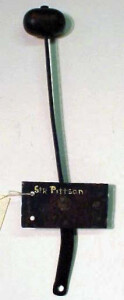 | VESSEL INFORMATION-- VESSEL NAME: PITTSTON SHIP NUMBER: 19910 VESSEL TYPE: WOOD STEAM SIDE-WHEEL TOW BOAT SERVICE DATES: 1852-1909 DATE WRECKED: SHIP BUILDER: SHIP LINE: BUILDER LOCATION: NEW YORK, NEW YORK ASSOCIATED PLACE: HUDSON RIVER VESSEL HISTORY: MAJOR EVENT: CAPTAINS OR OTHER RELATED PEOPLE: SHIP OWNERS: ENGINE BUILDER AND LOCATION: VESSEL DIMENSIONS: 108 x 20 x 6 LABEL COPY: Gong Clapper from the Pittston Brass; 20 3/4 x 6 x 2-1/4" Coll. The Mariners' Museum, 1941.00165.000001 KH 17.01 (The Hudson River Museum) | CL2788 | |||||||
| 7 | No image URL. | VESSEL INFORMATION-- VESSEL NAME: PITTSTON SHIP NUMBER: 19910 VESSEL TYPE: WOOD STEAM SIDE-WHEEL TOW BOAT SERVICE DATES: 1852-1909 DATE WRECKED: SHIP BUILDER: SHIP LINE: BUILDER LOCATION: NEW YORK, NEW YORK ASSOCIATED PLACE: VESSEL HISTORY: MAJOR EVENT: CAPTAINS OR OTHER RELATED PEOPLE: SHIP OWNERS: ENGINE BUILDER AND LOCATION: VESSEL DIMENSIONS: 108 x 20 x 6 REGISTRY NUMBER: ALL SHIP NAMES: (1) RELATED VESSELS: HOME PORT: PLACE OF DISPOSAL: DATE OF DISPOSAL: | CL26841 | |||||||
| 8 |  | Newport News (Va.) | Label indicating this print was exhibited in the 2nd Annual Exhibition of Marine Photography. Label indicating printed was shown at the Fort Jenkins Camera Club, West Pittston, Pennsylvania, June 11, 1953, 4th Place. Label indicating print was accepted into the Virginia Photographic Salon, 1948. Label indicating print was exhibited at the Tripod Camera Club, Dayton, Ohio. | Fishing boats | Starboard view of a Florida sponge fishing boat on Lake Maury. The ship is at anchor in still water with sails open. | P0025/02-#13 | ||||
| 9 | 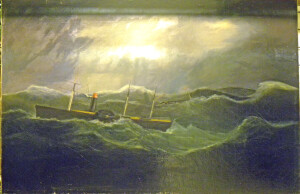 | SHORT DESCRIPTION: View of the PACIFIC rescuing the crew of the sinking barque JESSIE STEPHENS. NOTES: Lloyd's Register of Shipping from 1849 to 1852 consistently spells the name of this barque as Jessie Stephens. Newspapers spell the name of the barque Jessie Stephens in advertisements and reports of sailings between 1847 and 1852 and Jesse Stevens in reports of the wreck. NOTES: Commentary from A. S. Davidson published in ‘Samuel Walters-Marine Artist, Fifty Years of Sea, Sail & Steam’, page 96: The Collins liner P.S. Pacific rescuing the crew of the barque Jessie [also seen spelled Jesse] Stevens in mid-Atlantic, December 4th 1852. An inscribed lithograph by Dutton after the original by Walters (see number 40 in the list of prints) [see LP358] is the source of the details. A “Francis”’ metallic Life Boat” was used to transfer the barque’s crew, and is just visible off the hulk’s stern. Oil on canvas 28 x 32, signed and dated 1853. NOTES: Reported in the Hampshire Telegraph and Naval Chronicle, December 11, 1852, page 8: By Electric Telegraph from America, to Liverpool, The Pacific fell in with the Jessie Stephens, of Irvin, from Quebec for Glasgow, waterlogged and in a sinking state, and lay by her for upwards of 12 hours before she could succeed in rescuing the crew, 16 in number. They were, however, after much exertion, all got safely on board. The passengers subscribed 500 dollars for the crew of the boat that rescued the unfortunate persons. Reported in the New York Times, December 25, 1852, page 4: The Pacific arrived out on the 10th with the crew of the Jesse Stevens of Quebec bound for Belfast, whom she had rescued from the wreck of that vessel. Reported in the Brooklyn Eagle, December 30, 1852, page 2: The Tribune makes the following interesting extract from a letter of Marcus Spring, Esq, one of our citizens, who formerly had his residence on State street, between Bond and Nevins. It gives a description of the saving of the crew of the Scotch bark Jesse Stevens, by the steamer Pacific, on her last passage to Liverpool. We are sure no one can read this simple narrative without something of the emotions it so vividly expresses: - One morning, while wrapped up in blankets, overcoats, &c., on the sofa, the wind and sleet and snow roaring round the heaving ship, one of the passengers came down and reported that a wreck had been seen in the midst of the storm, and men clinging to it, and calling out "Save us! save us!" Though so nearly stupefied as to care for nothing, even if we had been the wrecked ones ourselves; and hardly believing, at first, it could be so, I aroused myself; and sure enough, all my own stupid and selfish feelings, all nausea and headache, and all murmuring spirit in view of our own condition, were instantly dissipated, and gave place to the heartiest sympathy and earnest prayers for sixteen poor fellows in a shattered bark, with sails torn and streaming in the wind, masts all wrenched off and swept away, and the water rushing through the sides of the vessel, as she rose now and then on a high wave, the sea rolling over her, a perfect flood every minute. Our ship had stopped her engines, and was hovering about; coming near enough, in the brief intervals of the storm, for Captain Nye to speak through his trumpet a word of encouragement. The Captain had been sick with a violent cold and inflammation of the lungs, (the first time, I think, since he became a captain,) but this had called him from his bed, and, dressed in his great tarpaulin coat, with his hat drawn down over his ears, a sailor holding him from falling as he stood on the steep deck, the ship almost tumbling over on her sides at every roll, his fine face flushed with excitement, as the wind and sleet dashed into it, and against him, as if they would take him off his feet; his trumpet in his hand, he raised above the war of the storm his voice of command to engineers, sailors, &c., to go on or stop, or go to the other side of the wreck, trying to keep near it, and avoid dashing against it, to the certain ruin of all. All this lasted an hour or more, while we passengers on the upper deck, holding on to ropes to keep from being dashed overboard, and watching the poor fellows, when the mists, and clouds, and spray, gave us opportunity to see them climbing the waves in their shattered bark, all looking anxiously towards us, and waving hats and hands. The rolling of the sea, some movements on the deck, and something I heard the Captain say, made me fear that it was a hopeless case, and that we should have to go and leave them when all at once a gleam of light broke from above, and a splendid rainbow appeared on a dark background of clouds behind us. It seemed, indeed, a heaven-sent sign of hope and promise, and I eagerly scanned the upturned faces of the wretched crew, to see if they did not hail it as such; but I since learned that they interpreted it according to the sailor's adage: "A rainbow in the morning, Is the sailor's warning; A rainbow night, Is the sailor's delight." While I supposed the bow of promise was filling their hearts, as it was mine, with joy and gratitude, the captain seized the moment of a lull in the storm to say to Tompkins, his third officer, (blessed be the noble-hearted fellow!) "Are you willing to risk going in the life-boat to their rescue?" "Ready and willing," was the prompt reply; and soon the beautiful boat, with Tompkins and three sailors, was bounding over the foaming waves. They had a rope soon drawn from ship to bark, passing through the life-boat. The brave little company were soon under the stern of the wreck, receiving with open arms, as they were dropped or thrown down (for some were so stupified with wet and cold they had to be thrown into the boat) the dripping sailors of the "Jesse Stevens." The waves ran so high it was unsafe to lie near the wreck, so the boat was hauled up by rope, at intervals, near enough for them to drop in one or two men-- then they would slacken the rope and let the boat recede before the returning wave should come and dash them together, then they would return, in like manner, for, one or two more; and, finally, all were safe in the boat, and we only hoped they would get it back to the ship with its freight of saved lives. Proudly again it bounded over the billows with its heavy load as if it had been a swan or a sea-bird, and though several times, when it went out of sight in the trough of the sea, we trembled lest we had seen it for the last time, it still mounted the top of the next wave and dashed down the watery hill-side towards us, again to rise and descend till they reached our ship's side, when a hundred men, with boisterous shouts and ropes let down, with nooses at the ends, soon hauled up every man of them. And so sixteen nice, respectable Scotchmen, from Augustine, on their way home from Can ada, with a load of lumber, are fellow-passengers with us with thankful hearts only and no lumber, and will reach home before they are looked for, to tell of their marvellous escape. Since this incident, certainly the most heart-thrilling and subline it has been my lot to witness, and well worth, we all say, all the sufferings of the voyage, we have all been in better spirits, and have slept, I imagine, with more grateful and happy dreams. We had a meeting of passengers and raised five hundred dollars as a purse for Tompkins and the three men who aided him. Tompkins looks very happy as he walks the deck, and is a great favorite to us all. Another report appears in the Pittston Gazette, December 31, 1852, page 2. See the object file for a copy. The Boston Evening Transcript, April 22, 1853, page 1 reports: PRESENTATIONS FOR MERITORIOUS SERVICES. Washington, 21st. The British Government has sent to Mr. Crampton, the British Minister, a gold medallion likeness of Her Majesty, Queen Victoria, and a gold pocket Chronometer for Capt. Nye, of the steamship Pacific; a gold mounted trumpet and £10 for the mate, and £10 for each of the six men who volunteered their services and saved the crew and passengers of the British barque Jesse Stevens, wrecked some time since. The presents are to be distributed through the State Department. | CL12503 | |||||||
| 10 | 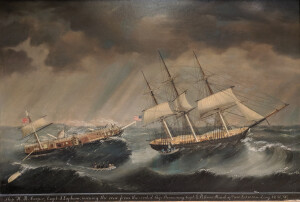 | SHORT DESCRIPTION: Oil painting on board depicting the rescue of the crew of the British ship Boomerang by the American vessel Helen R. Cooper. The ships are depicted in stormy seas. The Boomerang is missing its main and foremast and the mizzen is under a jury rig and flying the British ensign upside down as a sign of distress. There is a small boat in the water full of men while another floats upside down nearby. Men can be seen on the deck of the Boomerang surrounding a small boat as if they are attempting to launch it. Another small boat, with four sailors, is alongside the Helen R. Cooper and they appear to be assisting with the lifting of a woman on board in a bosun's chair. NOTES: See QK 24, the gold medal awarded to Lapham by the British government and QO 123, a portrait of Captain Isaac Lapham of the Helen R. Cooper. See QO 694 for painting of American Congress. ADDITIONAL INFORMATION: From The Country Gentleman, A Journal for The Farm, The Garden and Fireside, devoted to Improvement in Rural Affairs, to elevation in Mental, Moral and Social Character… vol. VIII, July to Jan 1857: Benevolence Rewarded.—the British Government has presented a gold medal and telescope to Captain Lapham, of the ship Helen R. Cooper, and a good medal to Captain Williams, of the ship American Congress, for their courageous and humane efforts in rescuing from a watery grave the crew of the British ship Boomerang. ADDITIONAL INFORMATION: From The Country Gentleman, A Journal for The Farm, The Garden and Fireside, devoted to Improvement in Rural Affairs, to elevation in Mental, Moral and Social Character… vol. VIII, July to Jan 1857: Benevolence Rewarded.—the British Government has presented a gold medal and telescope to Captain Lapham, of the ship Helen R. Cooper, and a good medal to Captain Williams, of the ship American Congress, for their courageous and humane efforts in rescuing from a watery grave the crew of the British ship Boomerang. VESSEL INFORMATION- VESSEL NAME: BOOMERANG VESSEL TYPE: SHIP SHIPBUILDER: Theophilus ST. JEAN BUILDER LOCATION: QUEBEC BUILD DATE: 1853 DIMENSIONS: 1,823 tons SHIPOWNER: Purchased by James Baines & Thomas Mackay in 1855 SHIP LINE: BLACK BALL LINE LOSS DATE: March 27, 1856 VESSEL HISTORY: [Compiled by Jeanne Willoz-Egnor, March 2018] The ship Boomerang (1823 tons) was built in Quebec in 1853 by Theopilus St. Jean. The ship was purchased by James Baines and Co.’s Black Ball Line in 1855 for use in transporting emigrants from Liverpool to Australia. A temporary depression in the trade led the ship’s owners to send Boomerang to Mobile, Alabama to bring home a shipment of 4300 bales of cotton. The vessel, captained by G. B. Crow, sailed for Mobile on November 2, 1855 reaching the port sometime before January 8th, 1856. Boomerang left Mobile on March 3rd, 1856 with 47 crew and two passengers. On March 23rd the vessel ran into a “terrific gale from the WSW.” The ship suffered through the storm for more than 48 hours before the vessel’s “patent steering apparatus” gave way and the ship “broached to.” As the crew worked to repair the steering gear they discovered the rudder was severely damaged. Soon afterwards, the ship sprang a leak and began rapidly filling with water. As the storm continued and the water rose, the crew threw everything unnecessary off the ship. It was also reported that the ferocity of the wind blew the furled sails right off the yards. On the 25th the gale moderated for a time giving the crew an opportunity to attempt the repair of the rudder but they were unsuccessful. As the water level inside Boomerang increased, the cargo became saturated on the lee side of the ship which caused Boomerang to begin settling on her “beam ends.” On the 26th, the gale re-intensified and forced the crew to wear the ship onto the opposite tack and set as much sail as possible to try and push the ship back into an upright position. Unfortunately, the maneuver was unsuccessful and the ship continued to lay on its port side. Even worse, Boomerang’s change in direction now exposed the ship’s deck to a heavy weather sea and waves were frequently breaking over or on board the vessel. Around 4:00 PM on the 26th, while it was still “blowing a very heavy gale,” the crew of Boomerang spotted the American ship Helen R. Cooper and hoisted a distress signal. Upon seeing the signal, the Cooper’s captain, Isaac Lapham, immediately changed direction and came to their aid. At Captain Crow’s request, Lapham kept the Helen R. Cooper near Boomerang throughout the night. Luckily, the intensity of the storm lessened during the overnight hours. The following morning showed Boomerang settling further and further to port and the decision was made to cut away the foremast to try and forestall or prevent a capsize. Soon afterwards, the mainmast fell and as it went it crushed the bow of Boomerang’s longboat as it was being lowered into the water. Around noon, the weather had moderated enough to commence the abandonment of the vessel using Boomerang’s last remaining boat—a little pinnace. With great difficulty, they managed to transfer 43 persons and most of their belongings to the Helen R. Cooper. One newspaper reported that an American seaman drowned during the effort. Unfortunately, Boomerang’s first mate, Adam Thompson, the carpenter and three seamen were prevented from leaving the stricken vessel by rising waves and the approach of nightfall. Intending to rescue the five men who remained on board when daylight returned Captain Lapham attempted to keep the Helen R. Cooper close to the floundering Boomerang throughout the night, but the squally weather soon separated the ships. When dawn arrived on March 28th Boomerang was nowhere to be seen. Captain Lapham searched the area for several hours hoping to spot the missing ship, but when nothing turned up he turned his ship for England. Although the newspapers originally reported that Boomerang had capsized and the men trapped on board had drowned, Captain Crow believed the ship had remained upright and was hopeful the men would be rescued by another vessel. Crow’s belief was justified just three days later when the ship American Congress, heading from New York to London, stumbled upon the wreck (in 41° latitude, 48° longitude) and rescued the five stranded sailors. American Congress wasn’t the only ship to spot the abandoned Boomerang: On March 30th, the ship J. P. Morse reported seeing the dismasted and abandoned Boomerang still flying a distress signal. The Morse’s captain said another vessel was nearby and had apparently sent a boat over to survey the wreck and recover any survivors. The boat returned to the unidentified vessel without anyone else on board so it probably wasn’t the American Congress. On March 31st, the crew of the bark John Gardner indicated they had seen Boomerang nearly on her beam ends and with her fore mast and main mast gone floating in latitude 40°53’ north, longitude 47°10’ west. Boomerang was spotted again on April 5th by the ship Muscongus in latitude 40°58’ north and longitude 45°50’ west. Since the abandoned Boomerang was still flying distress signals Muscongus ran down on the vessel and boarded it. A check showed it was abandoned with six feet of water in the hold, a strong list to port, with its bowsprit, jibboom, mizenmast and topmast standing but missing its rudder, fore and main masts. The boarding sailors hauled down the distress signal and Muscongus continued its voyage to Greenock, Scotland. On April 14th the ship Saranak spotted Boomerang at 43° latitude, 41° longitude and reported the vessel upright and rolling pretty equally from side to side in the trough of the sea. While sailing from Le Havre to New York, the ship Fairfield spotted Boomerang on April 17th in latitude 42°50’, longitude 41°50’. The sea was rough so they did not board the vessel but the captain, named Hathaway, reported the fore and main masts gone, the mizenmast standing, the rudder gone, cotton in the poop, her decks dry and hatches on with apparently little or no water in her. Boomerang was spotted again on April 18th by the ship Endymion who reported the vessel dismasted and waterlogged. At this point I thought “so much for Captain Hathaway’s interpretation of the situation!” but the ship Ward Chapman arrived in Liverpool in May and reported seeing the Boomerang on April 20th “perfectly upright, and floating light.” The ship Royal Arch spotted Boomerang with the ship Chanticleer close by in latitude 41° longitude 40° on April 26th. The captain reported that Chanticleer’s master had been on board and found the vessel perfectly tight. This was slightly contradicted when Chanticleer arrived back in London in July and reported seeing Boomerang in latitude 43°54 north, longitude 40°20’ west in a waterlogged condition on April 21st. With so many vessels spotting the derelict ship so frequently it was determined to try and salvage the vessel and its cargo. It was reported on May 22nd that the sum of £5,000 had been accumulated between the cities of Liverpool and London in order to undertake the salvage of the vessel (valued at £22,000) and her freight (valued between £35,000 and £60,000). As you would expect, the vessel was never seen again after Chanticleer’s sighting on April 21st. One of the vessels sent to find Boomerang was British Flag. The ship was spoken to on June 11th in latitude 48° north, longitude 29° west and it was reported all was well and they were continuing to search for the ship. The ship was spoken to again in latitude 11° north, longitude 26° west on the 5th of July as it headed for Bombay following an unsuccessful search for Boomerang. The United States also participated in the search for the vessel sending out the schooner Stetson, but the vessel arrived in Queenstown on July 10th without seeing any sign of the missing ship. While all of these vessels were busily spotting Boomerang, the two ships carrying the rescued crew and passengers were making their way to England. On April 8th, Helen R. Cooper met a fishing boat off Land’s End and transferred Boomerang’s captain, his wife, the second mate and sixteen crew on board for transport to Falmouth. The vessel then headed for its original destination, Le Havre, and arrived on April 13th discharging the remaining crew and two passengers. The American Congress landed the five crewmen it rescued in London on April 21st and they immediately headed for Liverpool. The men reported 7 feet of water in the Boomerang’s hold when they left the ship. On a weird side note, when Boomerang’s first mate, Adam Thompson, arrived in Liverpool he discovered that his sextant and a large quantity of clothes had been stolen from his sea chest. It was later discovered that Boomerang’s boatswain, John Dickenson and sailmaker David Blucker (first name might have been Howard) had taken the materials and sold them, probably assuming Thompson was dead. Boomerang’s captain saw the men go into an optician’s shop in Falmouth and upon hearing the sextant had been in the mate’s bag and was missing reported the incident to police. The shop was checked and the sextant was recovered for a payment of £2. The theft set off a huge legal rigmarole and I was never able to determine how the case was resolved. In October 1856, the British government awarded a gold medal and a telescope to Captain Isaac Lapham and Captain Williams of the American Congress for their “courageous and humane efforts in rescuing from a watery grave the crew of the British ship Boomerang.” VESSEL INFORMATION - VESSEL NAME: HELEN R. COOPER VESSEL BUILT: 1854 BUILDER LOCATION: PITTSTON, MAINE SHIP'S CAPTAIN: ISAAC LAPHAM | CL8646 |
Created 2026 by Don Barker, CBMM volunteer, for the Chesapeake Shipbuilding Project. shipbuilding@sailingworkboats.es